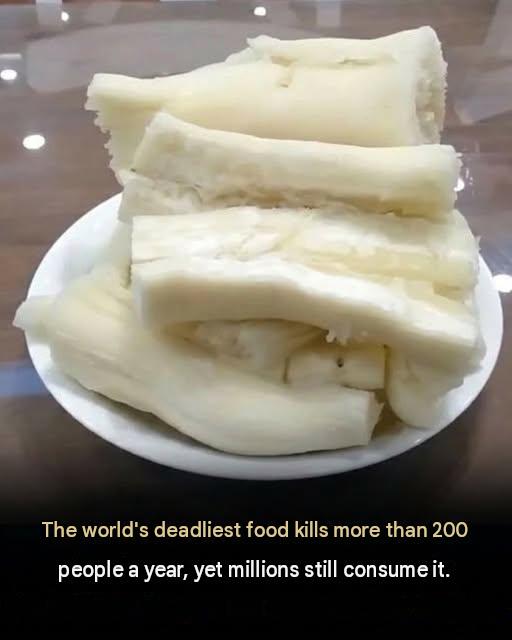
The World Health Organization (WHO) has been sounding the alarm for several years. According to the WHO, repeated exposure to high doses of dietary cyanide can lead to serious illnesses, including konzo. This irreversible disease causes sudden paralysis of the lower limbs and primarily affects populations living in areas of extreme poverty or conflict.

Each year, approximately 200 people die after consuming improperly prepared cassava. This figure may seem small compared to the 500 million consumers, but it is enough to justify this frightening nickname.
Under what circumstances is the danger greatest?
Most accidents occur in contexts of food shortages or armed conflict. In Venezuela, for example, populations struggling to survive consumed untreated cassava for lack of anything better. When resources are scarce, preparation steps are sometimes shortened—and that’s when the risk skyrockets.
The so-called “bitter” varieties are the most dangerous, especially when consumed with a diet low in protein. This combination is particularly risky for those with weakened immune systems.