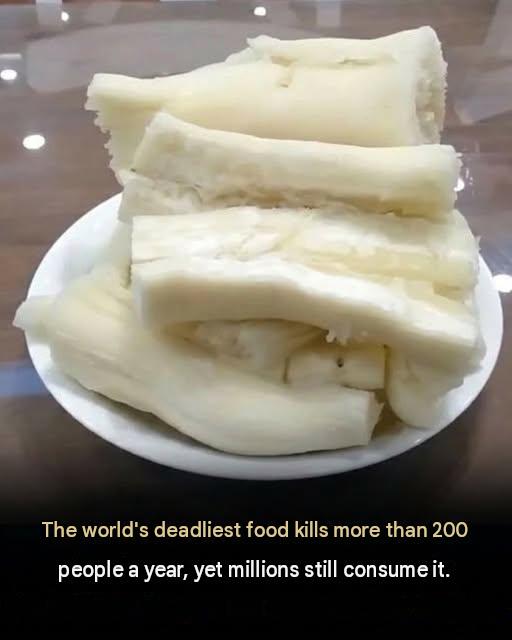
You may have encountered it in the form of flour, tapioca, or crispy chips. Cassava is a plant native to South America, now cultivated all over the world. Every year, more than 500 million people consume it, and hundreds of millions of tons are harvested across the globe.
It’s hard to imagine that such an everyday food could hide something so worrying. And yet.
Why is it nicknamed “the deadliest food in the world”?
Cassava naturally contains cyanogenic glucosides, chemical compounds the plant produces to defend itself against insects and animals. The problem? If the plant isn’t prepared properly, it can release cyanide—yes, you read that right.